News & Insights
How Much Does It Cost to Open a Small Arcade Room? A 2026 Budget & ROI Breakdown
Machine prices, opening-week settings from a real US claw machine store, and the payback math to run before you sign a lease — a 2026 budget guide for small arcade rooms.
QUICK ANSWER: Three numbers decide your budget: how many machines your floor fits, your all-in delivered cost per machine, and your expected revenue per machine per day. For a claw machine format, most operators start with machines in the US$400–550 range and prize stock around US$1.50 per plush. This guide gives you the complete cost-line list and the payback math — using the real opening-week numbers from a US claw machine store.
If you have spent an evening searching "how much does it cost to open an arcade," you have probably found a dozen answers — $20,000, $50,000, $200,000 — and none of them fit your city. That is not because the numbers online are wrong. It is because a startup budget is built from local variables: rent, import cost, machine mix and labor. This guide is for small-format operators — an arcade room, a claw machine shop, or a game corner inside a mall. If you are planning a full theme park, the same framework applies at a different scale.
Why Arcade Cost Numbers Online Never Match
Picture two operators in two countries ordering the same ten claw machines. Same factory, same specs — yet their first-year budgets differ by more than the machines themselves cost.
Four variables do most of the damage, and none of them live in a blog post:
Local rent. A mall corner in one city can cost several times what a similar corner costs in another.
Import cost. Freight, insurance, duties and port fees scale with distance and destination — on a full container, they can add a serious percentage on top of the machine price.
Machine mix. Ten claw machines is a different budget from ten racing simulators — both in purchase price and in power draw.
Do-it-yourself vs turnkey. Sourcing every item yourself can save supplier margin; it also costs months of your time and often produces worse terms on individual items than a supplier who ships every week.
So instead of copying someone else's total, build your own from a complete list plus the payback math. That is what the rest of this guide does.
Inside Clawtopia: The Real Numbers Behind a US Claw Machine Store
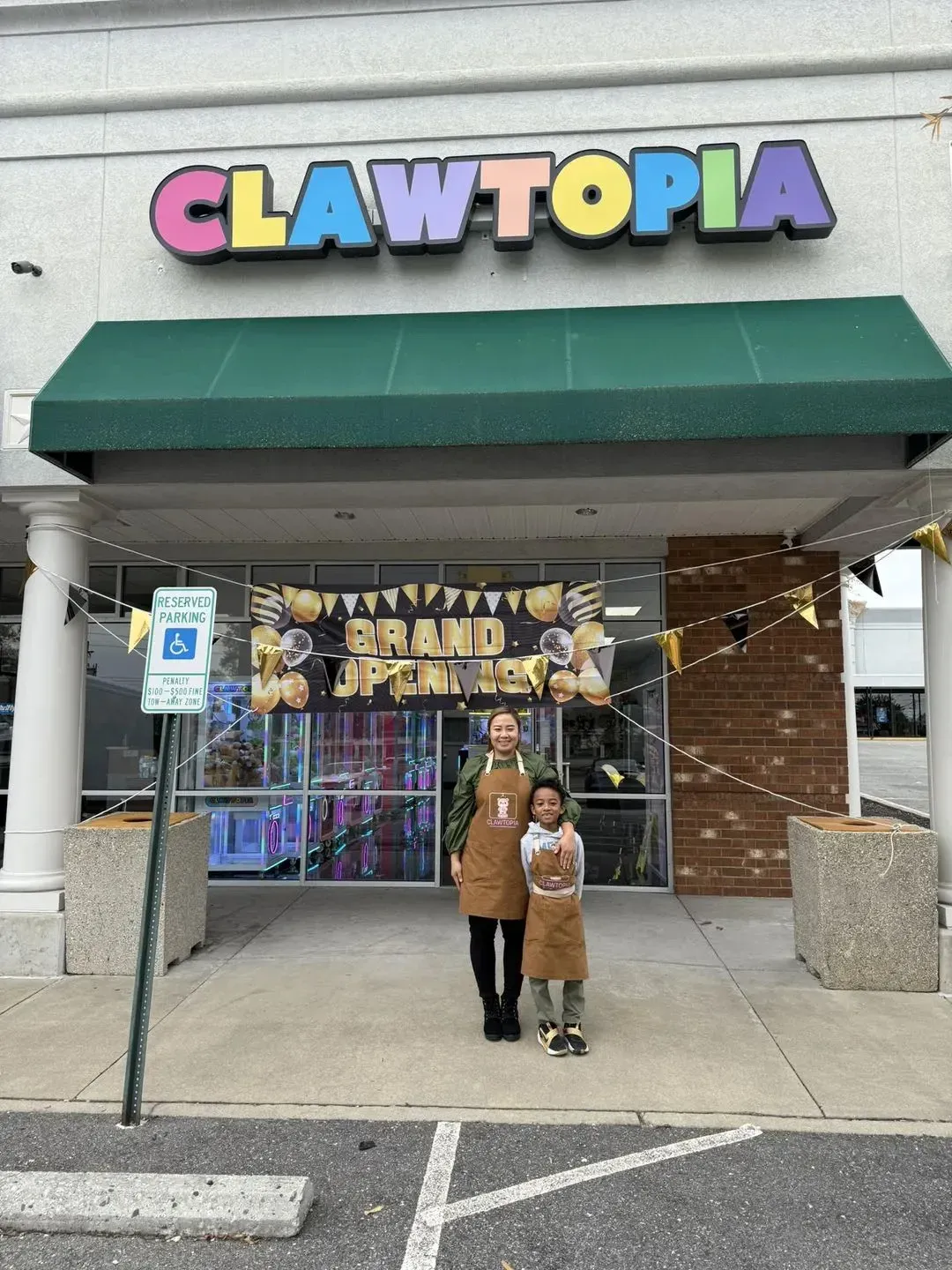
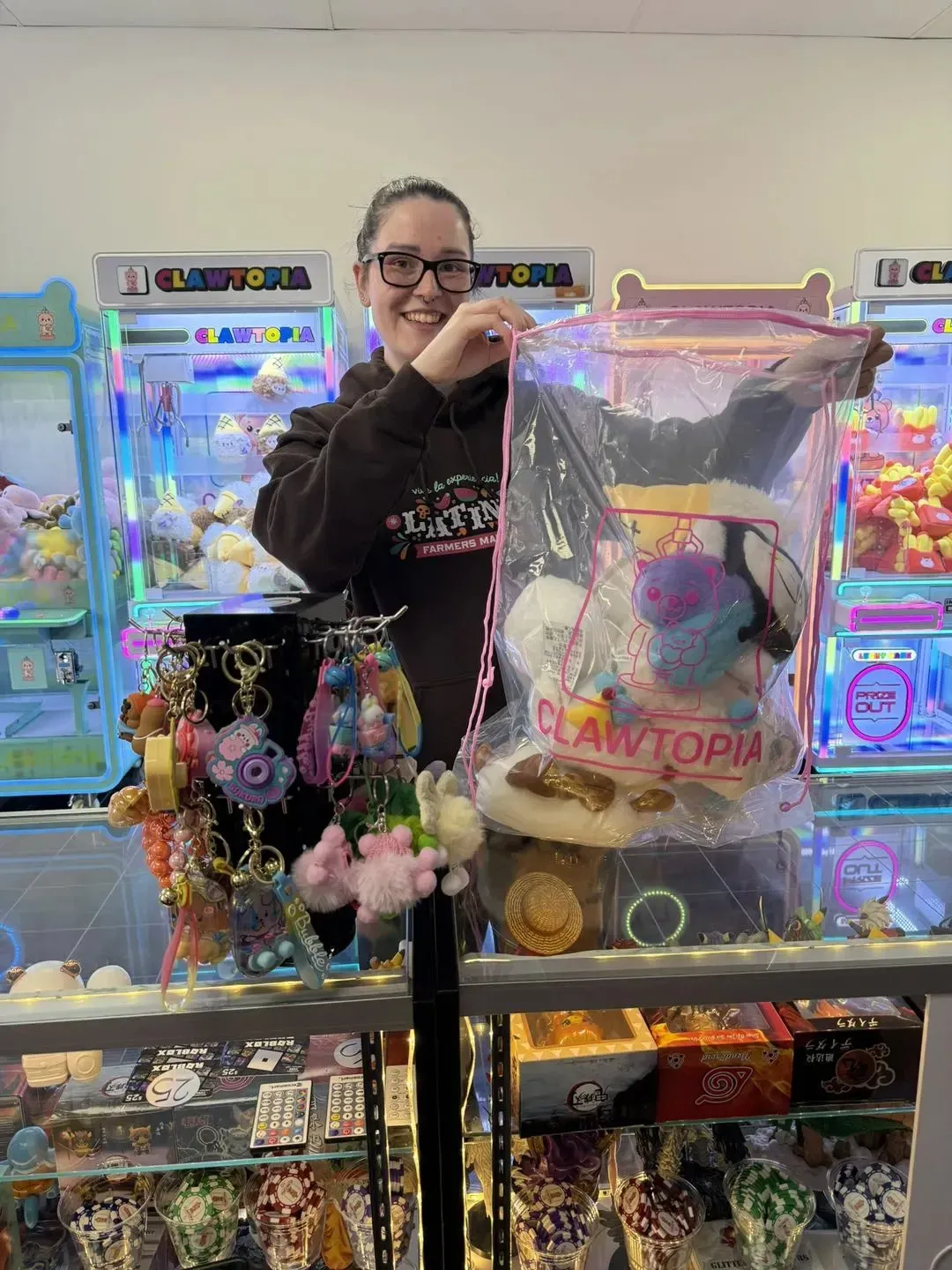
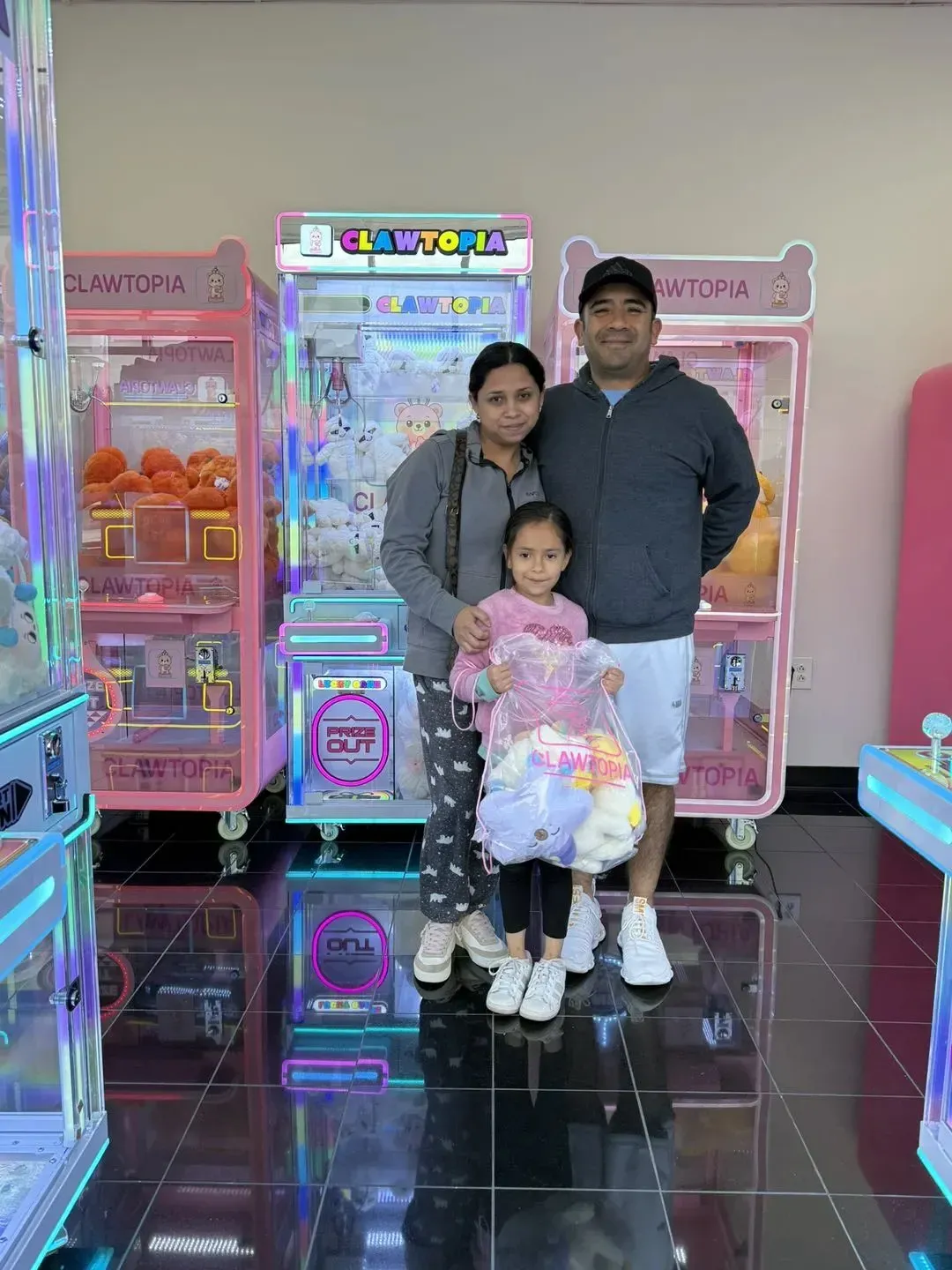
To ground this budget in reality, look at one of our customers: Clawtopia, a claw machine retail chain in the United States. Its Henrico, Virginia location (8023 W Broad St, Henrico, VA 23294) opened with a floor built on one principle — choose machines that create different kinds of win moments.
The mix: standard claw machines for the classic experience; 4-player mini claw machines so a family can play one cabinet together; scissor machines for skill-based prize cutting; a coin changer that keeps play frictionless; and a cotton candy machine that turns the visit into a small outing.
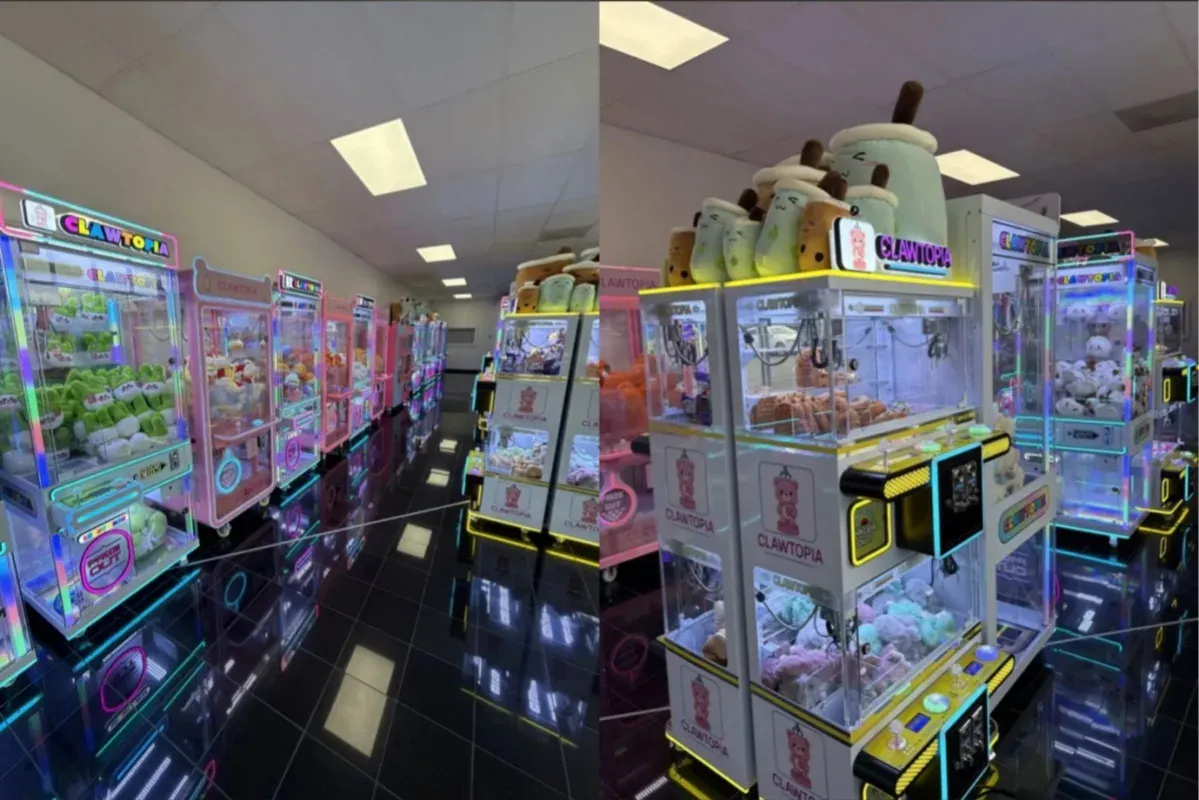
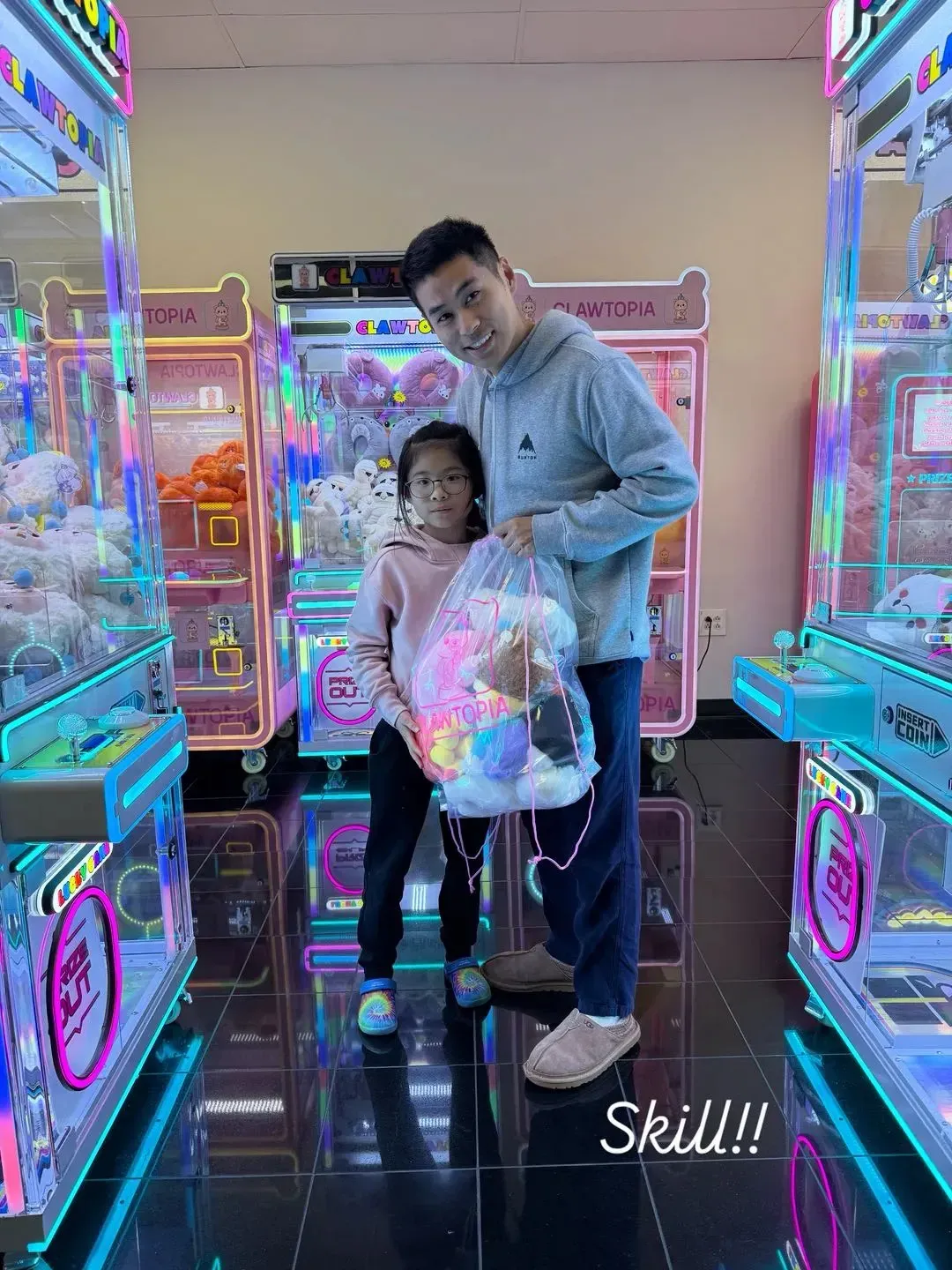
That opening week, the store ran a deliberately generous promotion: US$10 for 45 coins, 2 coins per play, with a prize landing roughly every 5 to 8 plays. Generous? Yes — on purpose. The math below shows it still works, and the crowd it builds works even better.
The Complete Cost-Line List
Most first-time budgets miss two or three lines. Here are all of them, in the order money actually leaves your account.
One-time costs (counted once, before opening):
1. Machines. Your largest single line. Our commercial claw machines are typically priced between US$400 and US$550 per unit, depending on model and configuration — confirm the exact figure for your machine mix.
2. Shipping, insurance, customs and duties. Ask for both door-to-port and door-to-door quotes — they differ more than most buyers expect.
3. Venue deposit and fit-out period. You usually pay rent before the first coin drops.
4. Renovation and electrical work. Flooring, lighting, wiring and AC. Power planning is cheap if you do it early: a compact 60 W claw machine means a bank of ten draws about 600 W in total — a modest load for a normal commercial circuit.
5. Signage and lightbox. Your first marketing asset, and the cheapest one you will ever buy.
6. Prize stock. A real cost line, not an afterthought. Quality plush toys cost around US$1.50 per piece, and we recommend stocking about 150 pieces per machine — roughly three times a standard machine's capacity, so a busy weekend never empties your cabinets. That is roughly US$225 of prize stock for your first machine — budget it before opening day, not after.
7. Spare parts. Claws, belts and common wear items. Every order includes a complimentary spare-parts package, and buying replacements together with the machines is cheaper than sourcing them later.
8. Payment equipment and cash float. Coin mechanisms, card readers or a POS system, plus working change. Clawtopia runs a coin changer for exactly this reason — coin play should never stall at the door.
9. Permits and local registrations. Varies widely by country and city — check before you sign anything.
10. Soft-opening marketing budget.
Monthly costs (counted again every month): rent and service charges; electricity and water; staff wages; prize restocking (this one grows as your traffic grows — a good problem, but plan for it); maintenance and consumables; payment processing fees.
The money does not leave all at once — and the order matters. In practice, payments follow a sequence: venue deposit first, then the machine order (often part-paid before production), then renovation and fit-out, then prize stock and cash float just before opening — with shipping, insurance and duties landing somewhere between production and delivery. Laying your budget out in this order answers a different question from the total: how much cash you need on each date, and where a delay in one line can cause a crunch in another.
The Machine Math Behind Every Payback
Now the part that decides everything else: what one machine actually earns. Every claw machine we ship arrives with two settings that drive the math:
Coins per play — what a player pays per attempt.
Win rate (payout frequency) — how many plays it takes, on average, before the claw grips at full strength and delivers a prize.
Here is that math with Clawtopia's opening settings. A customer buying US$10 receives 45 coins — about 22 plays at 2 coins each. With a prize every 5 to 8 plays, that is roughly 3 to 4 prizes per US$10. At US$1.50 per plush, prizes cost the operator about US$4.20 to US$6.75 — leaving roughly US$3.25 to US$5.80 in gross profit per US$10 played. In other words, the store keeps about a third to more than half of every dollar played — even while running opening-week settings that a player clearly wins on.
And the machine pays for itself faster than most first-time operators expect. Run the numbers on one machine:
At 50 plays a day, a claw machine returns roughly US$7 to US$13 in gross profit daily — so a US$400 to US$550 machine pays back in about one to two and a half months.
At 100 plays a day, that window shrinks to about two to five weeks.
These are example scenarios on purpose — plug in your own traffic numbers and see what your venue supports. The formula is in the next section.
Break-Even and Payback: The Two Formulas
You can run your whole feasibility check with two calculations. Use your local numbers.
1. Gross profit per play = (coins per play × value of one coin) − (prize cost ÷ win rate in plays)
2. Payback period = machine cost ÷ (gross profit per play × plays per day)
One supporting number — the break-even point for a machine bank: monthly fixed costs (rent, wages, utilities) ÷ total gross profit per play. That tells you how many plays per month the room needs before it starts feeding itself.
Here is the discipline that matters more than any formula: run the math on one machine first. If a single machine's payback is unacceptable, ten machines multiply the problem, not the solution.
Run the Numbers Before You Sign the Lease
The lease is the commitment that outlives every other line in this guide. Before you sign, run three estimates:
1. Conservative traffic. Count the people who pass your spot on a Tuesday afternoon, not on a Saturday evening. Estimate plays per day from that number, not from hope.
2. Break-even plays. Divide your monthly fixed costs by the gross profit per play (the formula above). That is how many plays per month the room needs just to stand still.
3. The reality check. Compare the break-even number against your conservative traffic estimate. If standing still needs more than half of your cautious daily traffic estimate to play every day, the rent — not the machines — is the line to renegotiate.
Machines can be adjusted, replaced and resold when your plan changes. A lease commitment is much harder to move.
Where New Operators Overspend (and Under-Spend)
Too many machine types, too early. Breadth feels safer; it usually lowers returns at the start. Open with proven earners — Clawtopia's floor is telling: claw machines first, then complementary play styles — and add variety after you know your traffic.
The cheap-quote trap. A low quote that skips the spec sheet, the loading plan and the spare-parts list is a risk transfer, not a saving — the same checklist we give in our wholesale buyer's guide applies here.
Over-renovating before validating traffic. Paint and lighting are cheap; marble is not. Let the machines and prizes do the talking in month one.
Under-spending on prizes. The prize is the product. A half-empty cabinet quietly kills repeat play — hence the 150-piece stocking rule above.
Skipping the preset step. Settings tuned after arrival mean weeks of public trial and error, at your expense.
Underestimating working capital. Opening-week traffic is never steady traffic. Keep enough float to cover roughly three months of fixed costs plus prize restocking while the room finds its rhythm.
How Factory-Direct Turnkey Shrinks the Budget
From our base in Panyu, Guangzhou — the global heart of the amusement machine industry — we handle the cost lines that international buyers most often get wrong:
3D store design before you commit. Send us your floor plan — even a rough sketch — and our design team will prepare a 3D layout of your venue, so you can see your machine mix and count before you sign the lease.
Factory presets and testing. Your machines are set to your coin value and win rate, tested, and shown to you on video before packing.
Secure export packing and door-to-door logistics. From secure packaging to door-to-door delivery, we handle the export process.
Training and support after arrival. Video guides cover settings changes — if you can use a smartphone, you can adjust these machines.
Warranty and support, in writing. Every machine ships with a one-year warranty and lifetime free maintenance, and each order includes a complimentary accessory and spare-parts package — so a worn claw or belt does not become a months-long wait.
Your Next Step
Send us two things: (1) your floor plan or rough dimensions, and (2) the city your arcade will open in. We will reply with a recommended machine mix for your space, a reference budget for your venue size, and for larger projects, a 3D layout of your venue.
A startup budget is a set of decisions, not a number you find online.
EDITORIAL NOTE
Written by the Onesman Amusement team. Figures labeled as examples illustrate the calculation method using opening-week settings from a customer store, verified with the store owner. Specifications refer to our current production line and should be confirmed before purchase. Last updated: 2026-10-16.