News & Insights
Custom Claw Machine OEM: What a Factory Can Actually Change (2026)
Four layers decide what a custom claw machine can become: branding, cabinet, control board and certification. What each layer can change, what it cannot, and the spec sheet to send first.
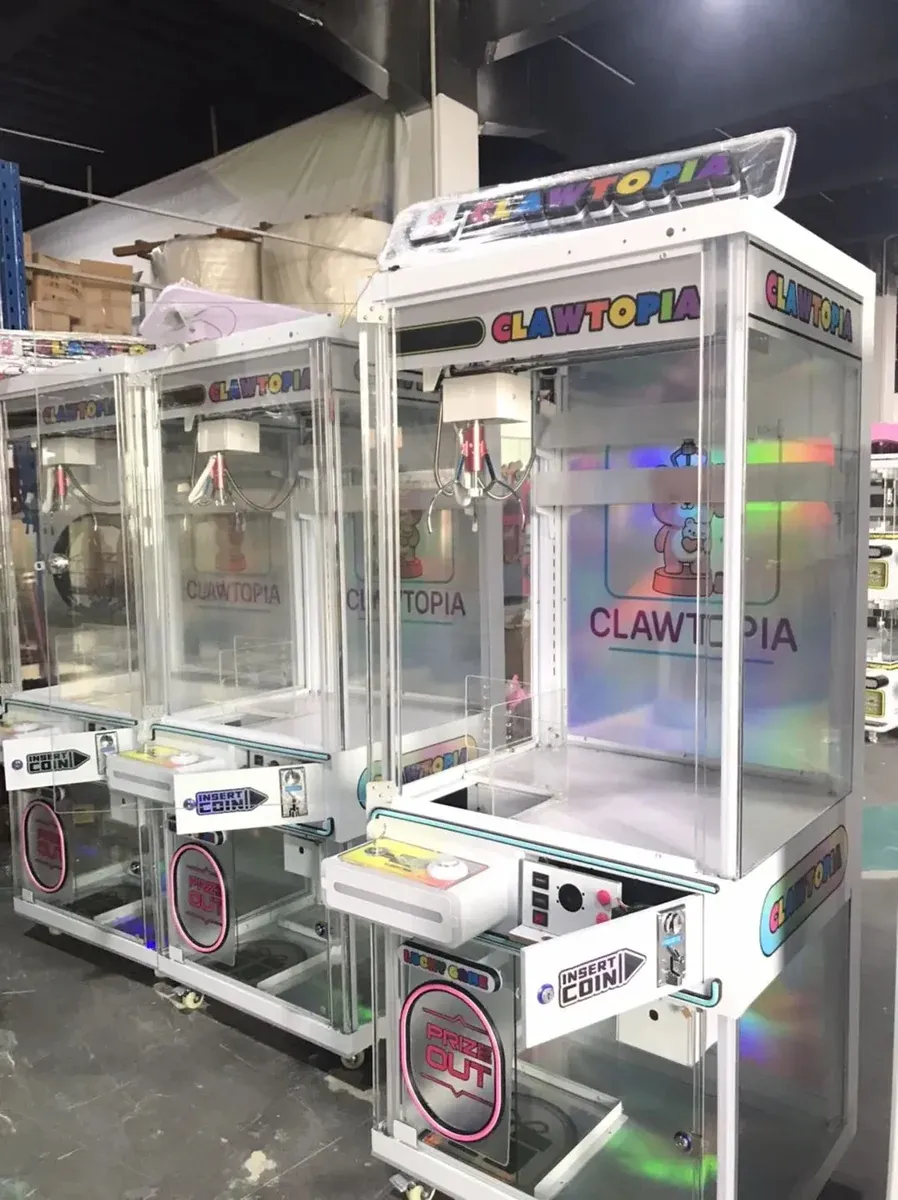
QUICK ANSWER: A custom claw machine changes on four layers: branding (decals, colours, logo, language), cabinet (prize chute, lighting, marquee, trim), control board and firmware (claw strength, win cycle, coin ratio, voice, payment, connectivity), and compliance (voltage, plug, certification for the destination market). The first layer is what most suppliers mean by "custom". The third layer is where a real factory separates itself from a trading company — and where most of the practical value sits.
"Custom" Is Doing a Lot of Work in This Sentence
Search for a custom claw machine and you will find dozens of suppliers offering it. Very few will tell you where their customisation stops.
That matters because "custom" in this industry covers everything from swapping a decal to building a cabinet that did not exist before. A buyer who asks for "custom" and gets a logo sticker has not been lied to, exactly. They have been answered at the cheapest layer of a question that has four.
This guide walks through all four layers in the order they affect your project, from the cheap and fast to the expensive and slow. It is written from the factory side, which means it also covers what cannot be changed — the part suppliers tend to leave out.
If you are still comparing base machines rather than customisations, our commercial claw machine buyer's checklist covers that stage first.
Layer 1: Branding — Cheap, Fast, and Where Most "Custom" Orders Stop
Branding is the layer that turns a machine into your machine. It is also the layer with the shortest lead time and the least risk, because nothing structural changes.
What belongs here:
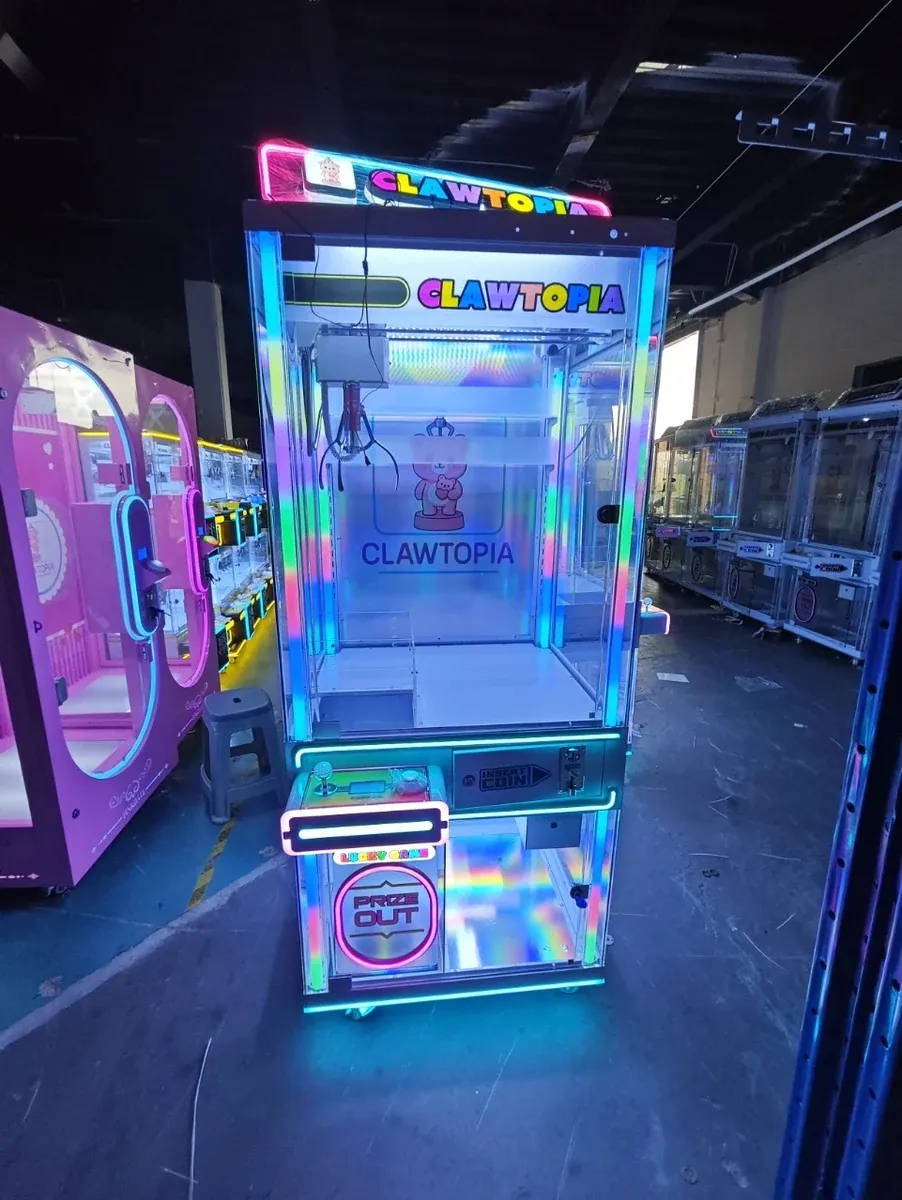
Cabinet graphics. Full-wrap vinyl artwork, or printed panels replacing the factory design. This is the one most buyers start with, and for a retail brand or a chain, it does more for perceived ownership than anything else on the list. Our customizable claw machine product page shows the branding route as a starting configuration.
Colour. Not just artwork — the cabinet shell, the trim, the marquee backlight tint. A colour change can be done at the paint or panel level without touching the mechanism.
Logo placement. Front panel, marquee, side panels, joystick surround, prize chute door. Where the logo sits is a design decision, and putting it in three places rather than one changes how the machine reads from the aisle.
Display language and copy. The attract screen, the win screen, the instruction panel and the settings menu all carry text. Multi-language voice prompts are part of this layer too — and they matter more than most buyers expect in markets where English is not the first language.
Packaging and documentation. Cartons printed with your brand, a manual in your language, a settings sheet your staff can actually follow. This is the least glamorous item on the list and the one that most affects how the machine is received on site.
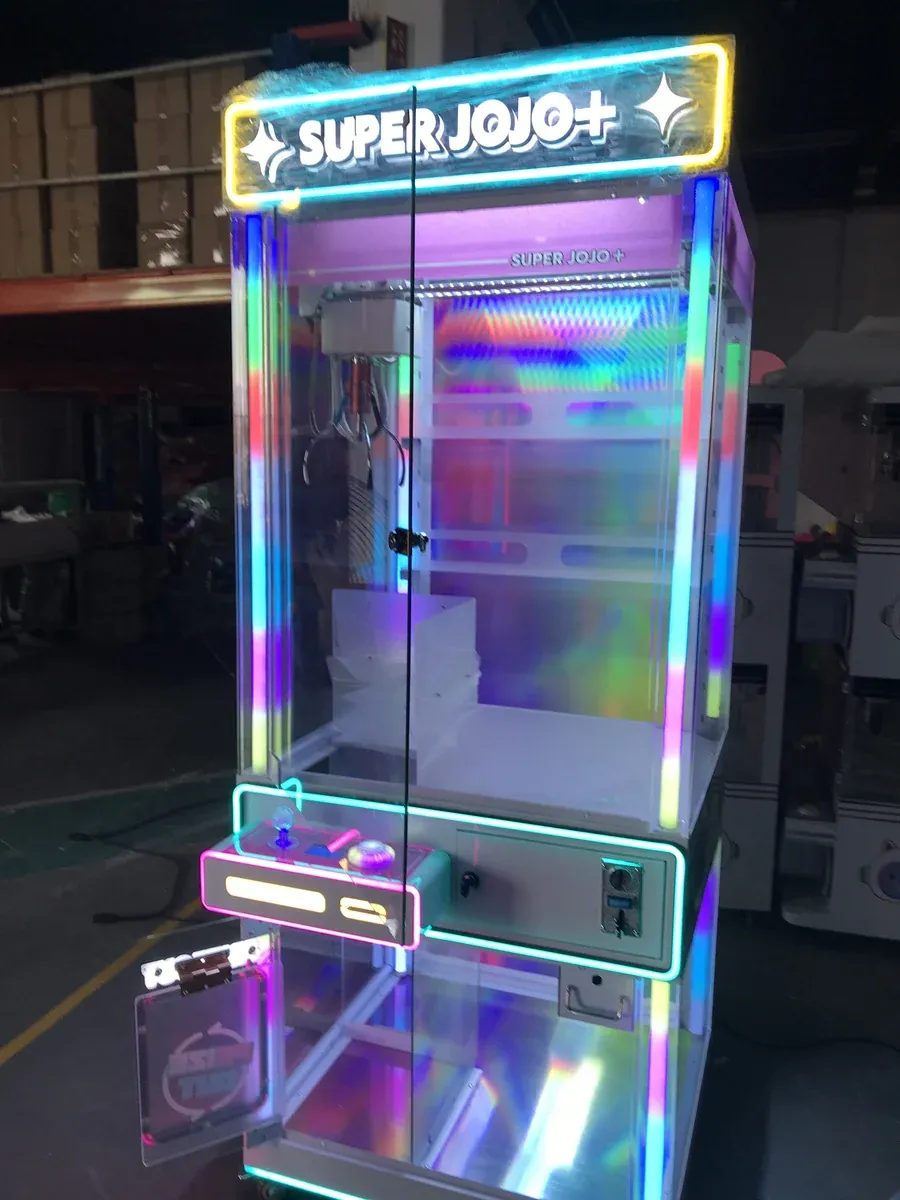
What Layer 1 cannot do: it cannot make the machine play differently, and it cannot make it fit a space it was not built for. A branded machine that pays out wrong is still a machine that pays out wrong.
Layer 2: Cabinet — Where the Machine Starts to Become a Different Product
At this layer you are changing physical parts, so lead time and tooling questions appear.
Prize chute and prize path. If your prize line runs larger or heavier than the standard assortment, the chute opening, the prize door and the internal path all have to suit it. This is among the most common mismatches in custom claw orders: a beautiful cabinet that cannot physically deliver the prize the operator intends to stock.
Marquee and lighting. Marquee shape, backlight colour, LED strips, edge lighting, the way the prize bay is lit from inside. Lighting is not decoration on a claw machine — a prize bay that reads clearly from four metres away is doing sales work every hour the venue is open.
Cabinet proportions and trim. Trim colour, panel material, corner treatment, base plinth. Within a proven cabinet family these are straightforward changes. Beyond it, you are into a new structure, which is a different conversation (see Layer 4).
Controls. Joystick type and height, button layout, coin entry position, the position of the settings/test access. Small changes with a large effect on how the machine feels to a player and how quickly staff can service it.
What Layer 2 cannot do: it cannot change the machine's mechanism. The crane, the motor set and the payout logic are not cabinet decisions. If you need those to behave differently, that is Layer 3.
Layer 3: Control Board and Firmware Settings — Where the Factory Shows
This is where a factory and a trading company visibly part ways, and it is the layer that decides whether a custom machine actually behaves the way you specified.
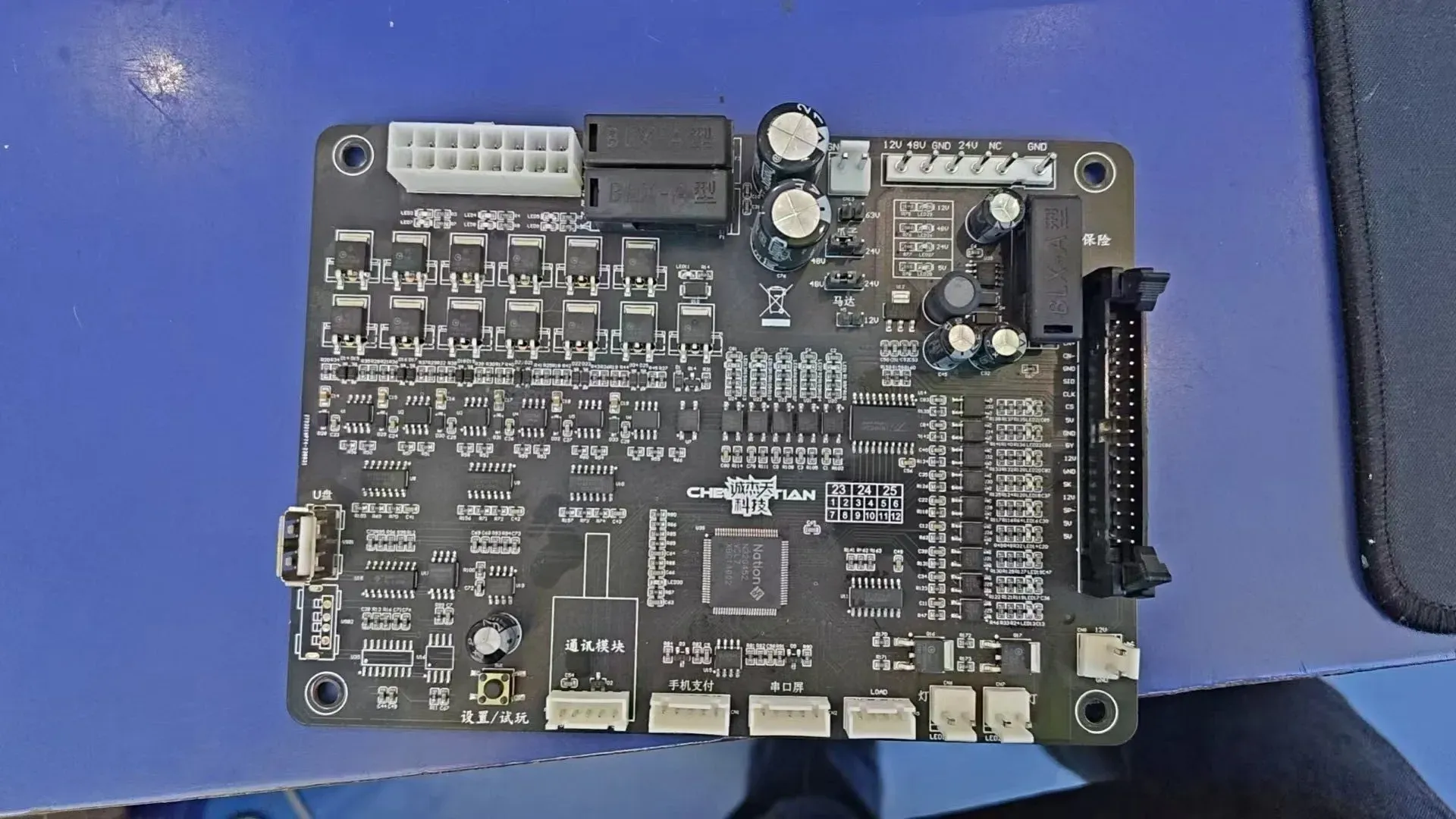
Our control boards are developed in-house at our own factory rather than bought as a generic third-party board — and where a buyer specifies a Taiwan-imported board instead, we build on that platform too. One expectation to set before this section: the machines are configurable, not reprogrammable. Every setting listed below can be preset to your specification before shipping, because the settings menu is part of the board; writing new firmware behaviours to a customer's design is not something we offer, and a buyer who needs that should say so at the enquiry stage.
Claw strength. Strong grip and weak grip are separate values, not one dial. A custom order can specify a starting configuration for each — which matters when the same cabinet model will be used for plush in one venue and premium prizes in another.
Win cycle. The payout cycle is a set value, not a random draw: one prize every N plays. Operators who plan their margins around a known ratio can have that ratio set before the machine ships, instead of tuning twenty cabinets on site during opening week.
Coin ratio and award mode. Coins per play, the play counter per cycle, and whether the award mode is fixed or variable. These are the numbers that decide whether the machine matches the coin or token system your venue already runs.
Gameplay presets. The firmware carries preset behaviours for different prize types — plush, snacks, boutique prizes and a Taiwan-style setting — so a custom order can start from the preset closest to your format rather than from a blank configuration.
Motor speed. Crane travel speed, which is a feel setting as much as a technical one.
Multi-language voice and display. Voice prompts and on-screen text in the language your players actually read.
Payment and connectivity. A dedicated mobile payment connector, a serial screen port, and RS232 communication with a separate module port. This is what allows a custom machine to fit a venue's existing payment setup rather than forcing the venue to adapt.
Parameter management from a phone. Because the board is networked, settings can be changed from a smartphone instead of opening the cabinet — practical for an operator running a bank of machines across a floor, and essential for a chain.
On-board counter and test button. A digital tube counter for play and coin counts at the cabinet, plus a physical settings/test button so a technician can run a test play without digging through menus.
Why this layer matters commercially: branding is a design service any supplier can subcontract. The settings layer is different — it decides how the machine actually behaves, and it can only be preset accurately by someone who knows the board's menu inside out. Because our board is developed in-house, we preset the claw strength, win cycle and coin ratio to your specification before the machine ships, and the same settings can be restored after any service.
A note on the Taiwan-board route: it is a proven platform and many buyers prefer it for its familiarity. Its settings are those the board platform provides, so tell us which board you specify and we will confirm the exact menu — claw strength, win cycle, coin ratio — for that board before production. Choosing the board is a spec-stage decision, not something to discover after delivery.
Layer 4: Compliance — the Layer That Decides Whether the Machine Can Be Sold
A custom machine that cannot legally be sold in your market is not a custom machine. It is inventory.
Voltage. Machines for the United States and Canada are built for 110–120V; Spain, France, the United Kingdom and most of Southeast Asia run 220–240V. This is not a detail to confirm after the order — it determines the power supply, the wiring and the plug.
Product certification. Our CE, FCC and ISO certificates are issued against coin operating machines, which is the category covering this machine. Certification scope is confirmed per product line and per destination market before you order — a structurally or electrically new design is a different question, and it should be raised at the specification stage, not after production.
Labelling and documentation. Rating plates, warning labels, the manual and the declaration documents all have to match the destination. This is where a container gets held at customs for a sticker.
What Layer 4 cannot do: it cannot retroactively certify a design change. If a custom order changes the electrical architecture, the certification scope has to be revisited before production, not after. This is among the most expensive lessons in custom arcade equipment, and it is entirely avoidable by asking the question at the spec stage.
What Genuinely Cannot Be Changed
Suppliers who never say no are not being flexible. They are deferring the no to a stage where it costs you more.
Licensed characters and IP artwork. Putting a licensed character on a cabinet requires the licence holder's authorisation. A factory can print artwork; it cannot grant rights it does not hold. If a design depends on a licensed character, the rights question comes before the design question.
Injection moulds and tooling. A cabinet shell is produced from tooling. Changing an existing mould in a small way is one thing; creating a new shell shape is a tooling project with its own cost and lead time, and it only makes sense above a certain volume.
Physics. A prize has to pass through the chute, be liftable by the claw at the configured grip, and fit under the cabinet's internal height. No amount of configuration changes those three constraints.
Certification scope. As above — a new electrical design needs new evidence.
How a Custom Order Actually Runs
The sequence matters more than the paperwork, because each step closes a decision.
1. Spec sheet. You state quantity, reference model, branding assets, colour reference, language, coin or token spec, prize dimensions, destination country and required certification.
2. Drawing or mockup. The factory returns a visual of what the machine will look like in your branding, plus a written confirmation of every layer-three setting. This is the step buyers skip, and it is the step that prevents the expensive argument later.
3. Sample or first article. For a cosmetic change, a photo or short video of the first unit is usually enough. For a structural or electrical change, a physical sample or a recorded test play is the safer approval.
4. Production. Machines are built, tested under power, and inspected before packing. Ask for the inspection record, not just a promise that inspection happened.
5. Pre-shipment check and loading. Packing inspected, container plan confirmed, loading photographs kept against the packing list.
6. Documents and delivery. Customs declaration documents prepared for the destination, then port-to-port or door-to-door delivery.
The Spec Sheet to Send Before You Ask for a Price
A supplier who quotes before seeing these is quoting a generic machine with your logo on it. Send all of them and the quote becomes a real number.
Quantity and repeat expectation. A one-off promotional unit and a 40-machine rollout are different projects.
Reference model and photos. The closest existing model, or an image of what you want. A reference shortens the design conversation by a week.
Branding assets. Vector logo, colour references, artwork files, and any font requirements. Raster logos photographed off a screen are the most common cause of a reprint.
Language. Display text, voice prompts and the manual language.
Coin or token specification. Denomination, coin or token, and whether the venue runs a card or mobile payment system that the machine must connect to.
Prize dimensions and weight. The actual product you intend to stock, with dimensions — not a category description.
Destination country and voltage. Plus the certification the market requires.
Packaging and labelling requirements. Carton printing, rating plate wording, any importer marks.
Target opening date. Which is what determines whether the schedule is realistic.
Five Ways Custom Orders Go Wrong
1. Artwork approved from a screen. A colour that looks right on a monitor can print differently on vinyl. Ask for a physical proof or a printed sample panel.
2. Prize and chute decided separately. The prize line is chosen by the operator, the chute by the factory, and nobody checks the two against each other until the first restock.
3. Voltage and plug confirmed late. It is a two-minute question at the spec stage and a rework at the packing stage.
4. Certification assumed from the base model. A structurally new machine inherits nothing automatically.
5. Changes after tooling or after production started. Every layer has a point of no return. Layer 1 can change late; Layer 4 cannot.
MOQ, Lead Time and Tooling Cost: What Actually Drives Them
Here are our numbers for a typical custom order — exterior branding, logo and sticker customisation on an existing cabinet family:
MOQ is 10 units for a custom order — typically exterior customisation: cabinet colours, logo and sticker artwork on a proven cabinet platform. Below that quantity the setup cost of a custom production run outweighs the order. A new shell or a new mechanism carries a tooling or engineering cost that has to be spread across units, which pushes the volume higher still.
Lead time is roughly 5 days for a small batch and about 22 days for a full container, driven by the slowest layer in the order: branding is measured in days, cabinet changes add production scheduling, and certification for a new design runs on the certification body's clock, not the factory's.
Tooling cost exists only when the change requires a new mould or a new fixture — most custom claw machine orders never touch it, because they stay inside an existing cabinet family. There is no sample fee: artwork proofs and machine photos are provided during production at no charge.
The honest answer to "how long and how much" is therefore: send the spec sheet, and the reply becomes specific.
Your Next Step
Send us the spec sheet above — quantity, reference model, branding assets, prize dimensions, destination country and target date. We will reply with what each layer of your request can and cannot deliver, a drawing of the proposed machine, and a price that reflects the actual configuration rather than a catalogue number. If you are still choosing the base cabinet, start from the claw machine range.
Customisation is not a menu. It is a set of decisions with different costs — and the earlier you make them, the cheaper they are.