News & Insights
How to Choose a Commercial Boxing Machine: Durability, Mechanism and Type Guide (2026)
How to choose a commercial boxing machine: structural durability, ball-return mechanism (motor vs electromagnet), the four main types, payment setup and the cost vs durability trade-off.
QUICK ANSWER: A commercial boxing machine is a long-term investment — the cabinet takes thousands of punches per month, so structural durability, the ball-return mechanism and the prize or scoring format all affect your return. This guide covers the five decisions that matter: cabinet construction, the ball-return mechanism (motor vs electromagnet), the four main machine types, payment setup, and how to balance purchase cost against lifetime maintenance.
Buying a commercial boxing machine is different from buying a claw machine or a racing simulator. The cabinet takes a direct physical impact on every play — thousands of punches per month in a busy venue — and the machine that survives one year in a bar is not always the machine that survives three years in an FEC. This guide walks through the decisions that separate a boxing machine that earns from one that costs.
Structural Durability: What to Check Before You Buy
The cabinet takes a direct physical impact on every play. Here is what to check:
Load-bearing frame. Ask the manufacturer about the material, thickness and construction of the main supporting frame, the punching bag mounting bracket and the base structure. Different cabinet components may use different materials - such as metal, acrylic and plastic. What matters is whether the load-bearing components are properly designed for repeated impact during commercial operation.
Bag mount. The punching bag attaches to an internal bracket. A solid bracket mounted directly to the frame lasts longer than one mounted to a plastic housing. Ask the supplier how the bag attaches and whether replacement bags are available.
Base stability. The cabinet should sit level without rocking. Casters help with repositioning, but the cabinet must lock steady during play. A machine that shifts on every punch fatigues the internal mount faster.
Testing. Ask the supplier: what is the heaviest punch the machine is rated for? Before purchasing, ask for actual product videos, structural details and available durability testing records.
Ball-Return Mechanism: Motor vs Electromagnet
After the punch, the ball returns to the player through a tube. Two mechanisms do this:
Motor-driven return. A small motor rolls the ball back through the tube. A motor rolls the ball back through the tube.
Electromagnetic return. An electromagnet pulls the ball back. An electromagnet pulls the ball back through the tube.
The most suitable mechanism depends on the specific machine design and its intended operating conditions. Ask your manufacturer to confirm the mechanism used in the model you are considering.
The Four Main Types of Commercial Boxing Machine
Standard strength-test machine. The player punches the bag, the screen shows a force score, and players compete on numbers. This is the most common type - the cabinet most bars and arcades start with. Metal frame construction with a coin acceptor and a score display.
Multi-player interactive machine. Two or more players punch side by side, with a linked screen that shows scores and rankings. The competitive format turns one credit into a rematch and draws a small crowd. Best for FECs and bars where social play drives repeat visits.
Boxing + kick combo machine. The cabinet includes both a punching bag and a kick target. The player alternates punches and kicks, which engages more muscle groups and creates a different game from the standard format. Best for gyms and fitness-focused venues.
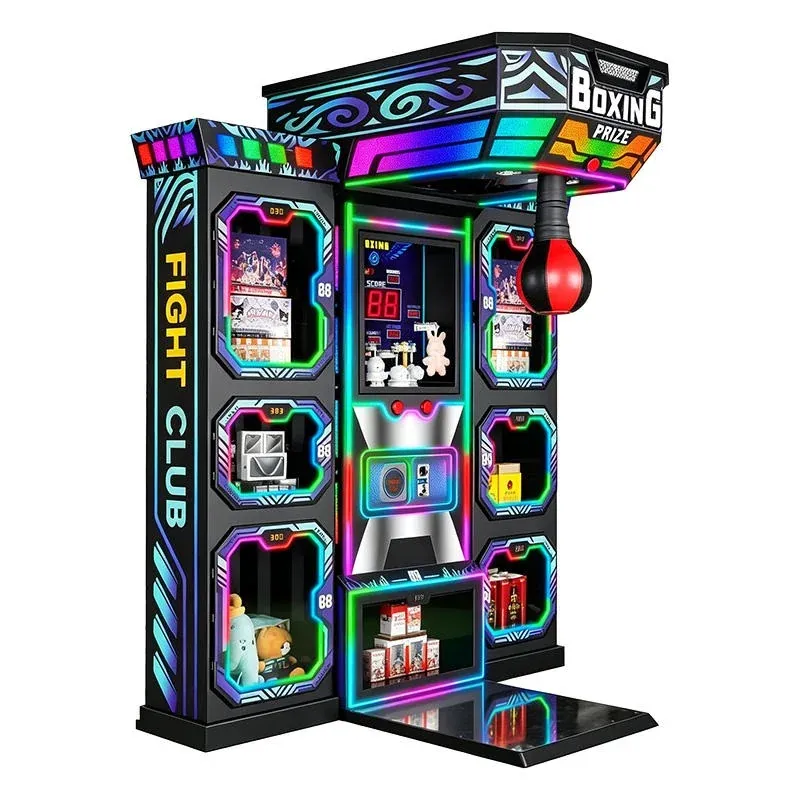
Prize-redemption machine. The player punches the bag, scores points, and the cabinet dispenses a prize from lit gift boxes when the target score is reached. The prize display changes the reward from a printed score to a physical item - which draws players who are not competing on strength. Best for malls, family entertainment centers and venues where the prize cabinet doubles as a display.
Payment Setup: Coins, Cards or Both
Most commercial boxing machines run coin-operated with a single coin acceptor. The acceptor should be a replaceable module - different markets use different coin sizes and currencies, and a modular acceptor lets you adapt without replacing the machine.
Depending on the destination market, operators may choose coin acceptors, banknote readers, card readers or cashless payment systems. The cabinet should be pre-wired or easily retrofitted for a card reader. Some operators run both: coins for walk-in traffic, card reader for regulars.
Balancing Cost, Durability and Maintenance
Real Product Example: Boxing Prize Machine
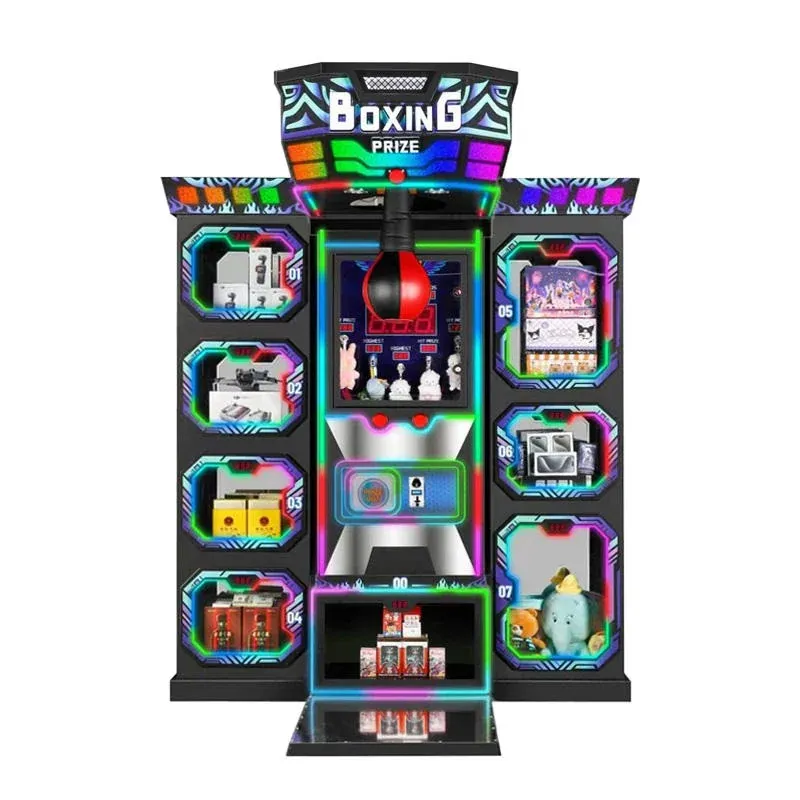
To illustrate how machine specifications affect purchasing decisions, here is a product from our range. The model measures 133 x 185 x 225 cm and weighs 210 kg, with a rated power of 500 W at 110V or 220V. It features seven illuminated gift cabinets and supports multiple payment options, including coins, cards, electronic payments and banknotes.
For distributors and arcade operators, these specifications help with evaluating floor space, transportation, electrical requirements and payment compatibility before ordering.
Buyers can also discuss logo customisation, language configuration and destination-market voltage requirements with our team.
How to Choose a Reliable Boxing Machine Manufacturer
When comparing suppliers, consider the machine price, shipping, warranty coverage, spare-parts availability, maintenance requirements and potential downtime.
A machine with better documented specifications and accessible after-sales support may offer better long-term value, depending on its operating environment.
Frequently Asked Questions
What is the difference between a boxing strength tester and a prize boxing machine? A strength tester shows a force score that players compare. A prize boxing machine adds a prize cabinet: reaching the target score opens a gift box or pays tickets.
What payment options are available? Depending on the model and destination market: coin acceptors, banknote readers, card readers and cashless payment systems. Confirm compatibility with your local payment providers before ordering.
Can the machine be customized with my logo? Yes. The top light box, side stickers, glass patterns and cabinet colors are customizable through the OEM/ODM program.
A commercial boxing machine is a long-term investment. A lower purchase price does not necessarily mean a lower total cost of ownership.
What to ask the supplier:
- What is the frame material and gauge? - How is the punching bag mounted? - Is the ball-return mechanism motor-driven or electromagnetic? - Are spare parts (punching balls, ball mounting components, sensors, mainboards, display components, coin acceptors, buttons, switches, wiring harness) available? - What is the warranty — and does it cover accessory replacement? - Can the cabinet be customized with your logo and colors?
What to budget for:
- The machine cost per unit - Shipping to your port or door - Spare parts kit (punching balls, mainboards, display components) - Prize stock if you choose a prize-redemption format
A machine with better documented specifications and accessible after-sales support may offer better long-term value, depending on its operating environment.
Confirm Before You Order
Voltage is built to order at 110V or 220V. Machines ship with a one-year warranty, lifetime free maintenance and a complimentary spare-parts package. Tell us your venue type and country and we will confirm the configuration and documents for your market.
For more on the prize-redemption format, see our boxing machine with prizes guide or browse the boxing machine range.
Talk to Us
Send your venue type, country and the machine type you are considering, and we will return a quotation with the specification and documents for your market. Request a quote.